The Great Carpathian Breach
The Iron Gates (Porțile de Fier / Đerdap) represents one of the most formidable geographic features in all of Eurasia. Here, the Danube river forces its passage through the towering limestone spine separating the Carpathian Mountains from the Balkan mountain range along the sovereign boundary between Romania and Serbia.
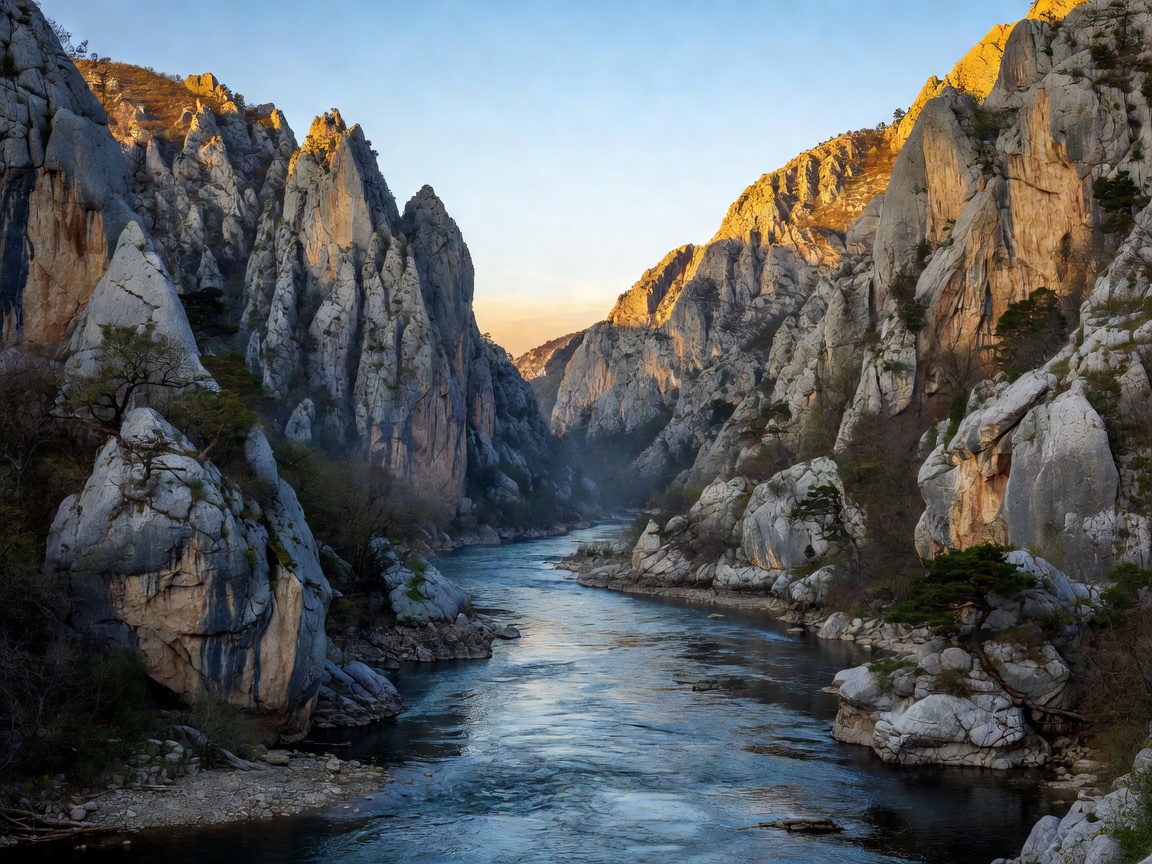
The Great and Small Boilers (Cazanele Mari & Mici)
In the narrowest sections of the gorge, known historically as The Boilers due to violent underwater rapids that created the illusion of boiling water, the river is constricted to a width of merely 150 meters while plummeting to depths exceeding 75 meters. Before the construction of modern dams, navigating these treacherous cataracts required specialized river pilots and locomotive-assisted tow paths.
The Rock Sculpture of King Decebalus
Carved into a colossal sheer limestone promontory in Mraconia Bay on the Romanian bank stands the 42.9-meter-tall face of Decebalus, the last king of Dacia who fought Emperor Trajan to maintain independence from Rome. Crafted between 1994 and 2004, it is the tallest rock sculpture in Europe and looks directly across the waterway toward the ancient Roman memorial plaque, Tabula Traiana, carved into the Serbian cliff in 100 AD.
The Djerdap Hydroelectric Lock Complex
Completed in 1972 as a joint Yugoslav-Romanian infrastructure project, the Iron Gates I dam raised the river level by over 35 meters, taming the turbulent cataracts and forming a peaceful reservoir lake. The dual two-stage lock system permits standard 1,500-ton cargo barges and modern passenger cruise liners to transit safely between the Pannonian Basin and the Pontic lowlands.